
The Good Trap is what happens when you get so good at fulfilling a role that you stop asking whether the role is still the one you want. It isn't a bad job or an obvious mistake. It's competence that has quietly become an obligation, and it is held in place by the fact that everyone around you approves of it.
You don't end up here by failing.
Most of the time you end up here because you are very, very good at doing what you're supposed to do. People can count on you. You handle things. You solve problems. You step up when somebody needs to step up. And every time you do that successfully, you collect another small piece of evidence that this is who you're supposed to be.
That's what makes it such an effective trap. You get praised for it.
So you keep going. And somewhere along the way, without any dramatic moment, you stop asking a very basic question.
What do I actually want?
I know that because I've lived it.
There have been periods of my life when I was responsible for a lot of people and a lot of things. I had a career I cared about. I had children to raise. After my husband died, I was suddenly the only parent responsible for keeping our family moving forward. There was no option to put life on hold while I figured out how I felt about any of it. There were kids who still needed to get to school. There were bills. There were decisions. There was work. There were all the ordinary things that keep showing up even when your life has become anything but ordinary.
So I got very good at handling what needed to be handled. That was necessary.
I want to be careful here, because I don't think responsibility is the enemy. Taking care of people isn't the problem. Being dependable isn't the problem. Doing your job well isn't the problem. The problem is when the role becomes so complete that you stop noticing there is still a person inside it.
There was always a perfectly legitimate reason.
For me the narrowing happened gradually. One responsibility at a time. One decision deferred. One thing I wanted that could wait because something else mattered more, and then another thing, and another.
That's part of what makes the Good Trap so hard to see. It doesn't sound unreasonable. It sounds reasonable. It says: this isn't the right time. You have too much going on. Other people need you. You don't really have a choice.
And sometimes our choices genuinely are limited. I'm never going to stand on a stage and pretend everybody has unlimited options. Money is real. Caregiving is real. Grief is real. Workplace expectations are real. There are seasons when the number of choices available to you gets very, very small.
SMALL IS NOT THE SAME THING AS NONE.
That distinction is most of the work. Having limited choices and having no choice are not the same thing. The Good Trap wants you to forget it, because once you believe there's no choice, you stop looking for the fork. You stop asking what you want. You stop trusting your own judgment about what might be possible. And you start executing the role instead of participating in your own life.
Life does not clear the calendar and send an engraved invitation. Mine hasn't.
It happens in small ways. A conversation you've needed to have for six months. Something you want to try, but this isn't the right season. Telling yourself you'll do something for yourself once everybody else is okay.
Everybody else may never be okay at the same time. There is no notice arriving to say: good news, you may now choose yourself.
What I eventually had to learn is that choosing something for myself did not automatically mean abandoning everyone else. I could love my children and have a life that belonged to me. I could be responsible and still make a choice somebody else didn't entirely understand. The world did not collapse because I made room for myself in my own life. I came back to the people I cared about more grounded, more present, more like myself.
This is bigger than self-care.
It is not a massage or a weekend off. It's agency — remembering you are still a person with judgment and desires and curiosity and ideas, even while you are carrying everything else.
Which is where this gets relevant to your room.
Organizations reward people who are very good at executing the role. We praise the employee who always gets it done, the manager who keeps everything moving, the person who can handle one more thing. And sometimes, without meaning to, we reward people for becoming very good at ignoring themselves. Then we wonder why they're burned out, or disengaged, or why they stop bringing new ideas, or why the good ones leave.
The answer isn't another workshop.
A lot of these people have been resilient for years. They know how to keep going. The more interesting question is what happens when people get so good at doing what's expected of them that they stop exercising judgment about what should happen next.
She is tired of being resilient.
There is someone in your audience — call her Claire, row 30 — who is already braced for another talk about pushing through. She is good at handling things, which is probably how she got here in the first place.
I don't want Claire to leave thinking she needs to become stronger. I want her to find the one place in her life where she has been telling herself she has no choice, and look at it again. Not because there is some magical option she's overlooked — there may not be. But because there is a real difference between I don't have a choice and I have choices and none of them are easy.
Defensible and effective are not the same thing.
If you're the person deciding whether to put this conversation on a stage, there's a layer here for you too. Event planners fall into the Good Trap as readily as anyone. You have a budget, a committee, expectations, people who want a certain kind of speaker or a certain kind of name. There is always a safe choice — the one nobody can blame you for. The good booker makes it.
If the goal is applause at the end of the session, plenty of speakers can deliver that. If the goal is for Claire in row 30 to be thinking about something differently on Monday morning, that is a different standard. Maybe the question isn't who is the safest speaker to book. Maybe it's what this particular room actually needs.
If I gave your people one thing to do, it would be this. Think of one place where you regularly say I don't have a choice, and change the sentence. Say the choices I have are — and then finish it.
You may still choose exactly what you're already doing. That matters. Agency doesn't mean choosing differently for the sake of it. Sometimes you look at everything and decide this is still the one you want. But now you're choosing it, and that is different from disappearing inside it.
The Good Trap is powerful because it makes the role feel inevitable. Sometimes the first step out is just remembering that underneath all those expectations, you are still a person who gets a say in what happens next.
Most of the people in your audience aren't in crisis. They're in the Good Trap. That's a harder problem — and a more interesting keynote.
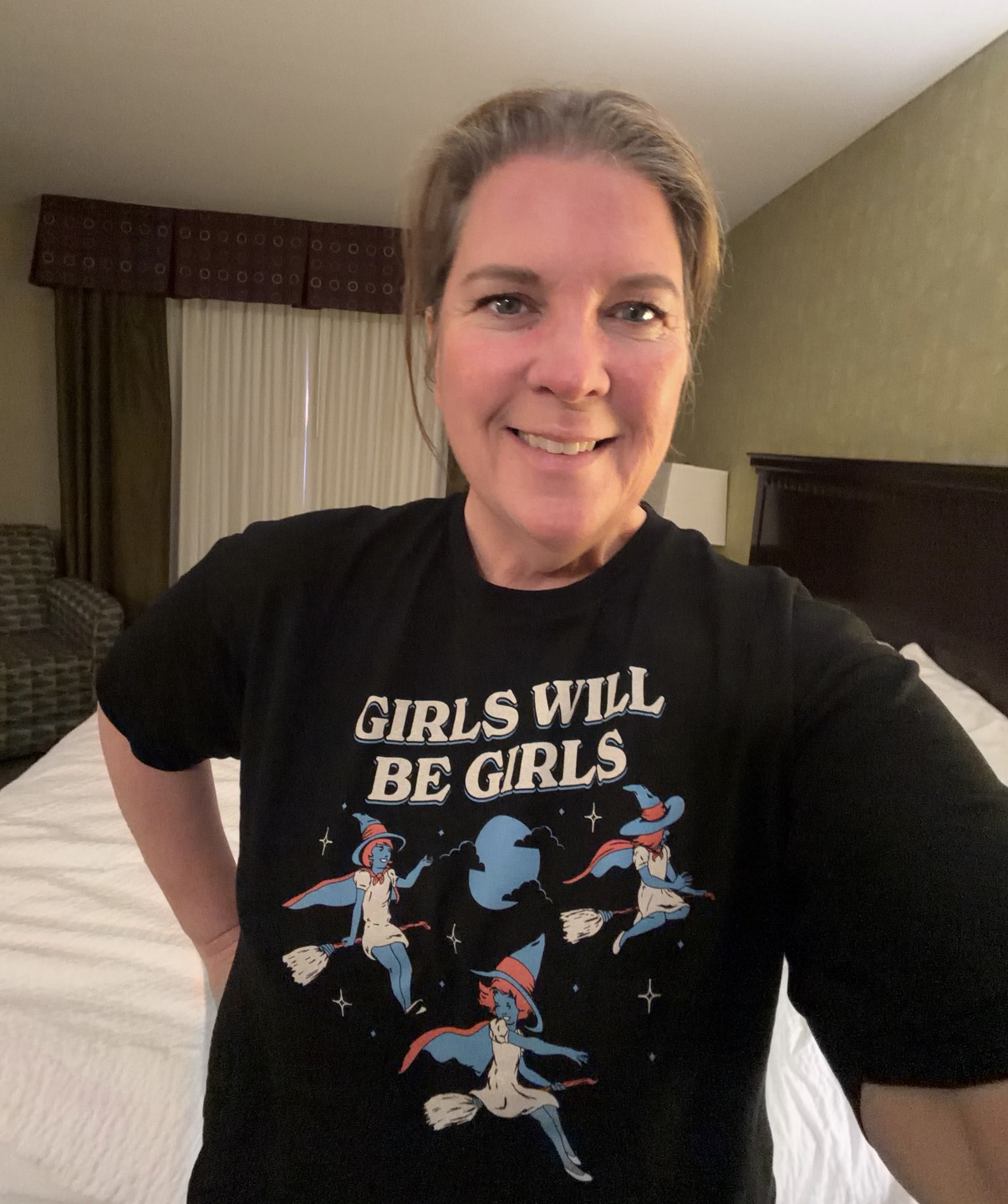
Therese Marzouk
Keynote Speaker · Workforce Development Trainer · Writer