
This is not a resilience talk. Resilience is about enduring and bouncing back. This is about the agency you still have when life does not go to plan — taking the next available step without waiting to feel ready, certain, or confident. It names the loss honestly and asks what you can still choose from here.
I'm not against resilience.
I needed a fair amount of it in my own life. But resilience is one of those words that has become so common we sometimes stop thinking about what we're actually asking people to do when we use it.
When an audience has been through a lot, or is in the middle of going through a lot, I don't think the most useful thing we can do is put someone on a stage and tell them how to become more resilient.
Because sometimes the people in that room are already incredibly resilient.
They've been adapting. They've been getting back up. They've been showing up for work while things are hard at home. They've been leading teams through uncertainty, taking care of other people, handling change they didn't ask for. And they're still here.
So resilience may not be the thing they're missing.
That's where this is different. It's about recognizing the agency you still have when life does not go according to plan — and taking the next step without waiting to feel completely ready, confident, or certain. It isn't about how you're supposed to feel about what happened. It's about what you can do from where you actually are.
Those are two very different things.
I was not ready to become a widow.
One of the biggest lessons of my life is that being ready and feeling ready are not the same thing. I've done a lot of things without feeling ready. Some I chose. Some I did not.
When my husband died unexpectedly, there was no version of me prepared to become the only parent raising three children. I didn't feel ready for any of the decisions that came next. But those decisions still came.
Life does not always wait until you feel strong enough to deal with it. Something happens, and ten minutes later somebody is asking you a question you never imagined having to answer. Then another — and you're still trying to understand what happened while life is already asking, okay, what now?
That isn't a resilient slogan. That's just reality.
So I made it smaller.
I couldn't answer every question about what the rest of our lives would look like. I couldn't build a grand plan for how we'd move through grief. I could just make the next decision. And then the next one — taking an enormous thing I couldn't possibly process all at once and breaking it into pieces I could actually handle. That's what I call chunking. I didn't do it because I felt ready. I did it because something had to happen next.
We spend a lot of time waiting for a feeling that may never arrive. We'll make the change when we feel confident. We'll have the conversation when we feel ready. Then we treat not feeling ready as evidence that we aren't ready. But being ready and feeling ready are not the same thing. One is a circumstance. The other is an emotion — and emotions are not reliable scheduling tools. Every time I've moved before the feeling caught up, the confidence didn't come before the jump. It came because I jumped.
She's exhausted from being strong.
That's one of the things Claire in row 30 needs to hear. Claire has probably heard the resilience talks. She's heard about bouncing back, about mindset, seen the inspirational quotes. Maybe some of it helped.
But she may also be sitting there thinking: I don't need someone to tell me how to be stronger. I'm exhausted from being strong. I don't need someone to tell me I can survive hard things — I already know that. I've got receipts.
What Claire may actually need is for someone to tell her she doesn't have to wait until she feels better about everything before she makes a move. She doesn't have to resolve every feeling first. She doesn't have to turn what happened into a lesson. She doesn't have to call it a gift.
The loss doesn't stop being a loss.
I will never stand on a stage and dress up the hardest parts of someone's life and call them inspiration. The loss is real. The disruption is real. The disappointment is real. None of that stops being true just because you keep moving.
That's the whole idea, actually. The loss is real. The forward is chosen. Not because the loss was secretly good. Because you still get to decide what happens next.
THE LOSS IS REAL.
THE FORWARD IS CHOSEN.
Sometimes back doesn't exist anymore.
This is different from telling people to bounce back, because sometimes I don't want to go back. Sometimes back doesn't exist. After my husband died, there was no bouncing back to the life I had before. That life was gone. The question was never how to get back there. It was how to move forward from here.
Forward didn't mean everything was okay, or that I had it figured out, or that I was ready for whatever came next. It meant I took the next step available to me. And then another.
That's the heart of it. Agency under disruption. Recognizing that something can happen you did not choose and would never have chosen — and you may still have some choice about what happens next. Maybe not unlimited choice. Maybe not the choices you wanted. But something.
Which is where it meets the Good Trap.
The Good Trap tells us there's a right way to handle things. The good employee keeps going. The good manager holds everything together. The good caregiver takes care of everybody else first. The good whatever-everyone-expects waits patiently until things settle down.
This asks a different question. Where is the fork in the road? Where are you telling yourself you have no choice, when you actually have one you haven't been willing or ready to look at yet? And what's the one step you can take? Not five steps. Not a total life transformation. One.
Motivation has a short shelf life.
That's what I want someone to leave with. Not wow, I feel motivated — motivation is lovely, but it has a short shelf life. I want something in their actual life to move. The conversation they've rehearsed for six months, finally had. The application they've been staring at, submitted. The boundary they've been thinking about, named.
That's a different outcome than inspiration, and it matters for an event planner bringing a speaker into a room where people have been through something hard.
Intention doesn't control impact.
The wrong speaker can make people feel worse. If your organization has been through layoffs or restructuring, and someone tells everyone to choose a better mindset, people know when they're being asked to put a positive spin on something that genuinely hurt. Tell exhausted people they need more resilience, and what they hear is: we need you to get better at tolerating this.
That may not be what the organization intends. But intention doesn't control impact, and that's the risk.
What people going through something hard need isn't a speaker who minimizes it to make the ending inspirational. They need someone who can acknowledge reality without leaving them stuck in it. I can say: yes, this is hard. No, I'm not going to pretend otherwise. And — what is still yours? For me, hope doesn't come from pretending everything will work out. It comes from realizing I still have some ability to participate in what happens next.
Name the jump.
So if you're wondering whether this is another resilience talk — no. Resilience may be part of what someone discovers in the process, but it isn't the assignment. The assignment isn't to become stronger, or bounce back, or find the gift. It's to stop treating the feeling of readiness as permission you have to wait for.
Because the biggest obstacle often isn't that you're not ready. It's that you're waiting to feel ready.
There's one thing I'd ask someone to do before they leave the room. Name the jump you've been standing in front of. Not your entire five-year plan. Not every problem you need to solve. The one thing you already know you've been waiting on. Then ask: what's the one step I could take before I feel ready?
You don't need everything to go right to keep moving forward. Sometimes you just need to recognize that the next step is already yours to take.
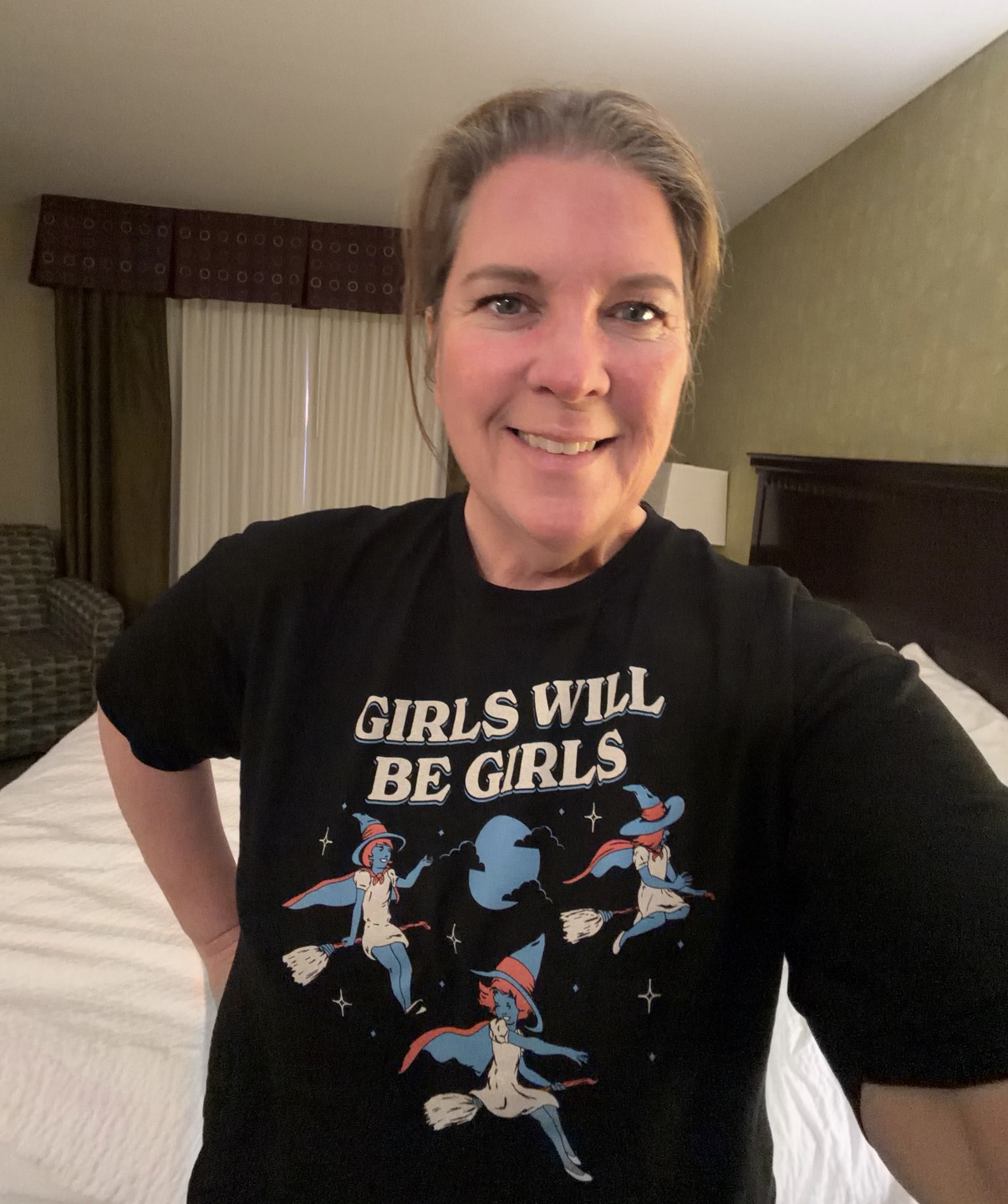
Therese Marzouk
Keynote Speaker · Workforce Development Trainer · Writer